

Partake in the development of Egypt’s
Integrated Waste Management System
Egypt is progressing from an underfunded system that is fragmented and informal and treating waste as burden to a modern integrated investment-based system.
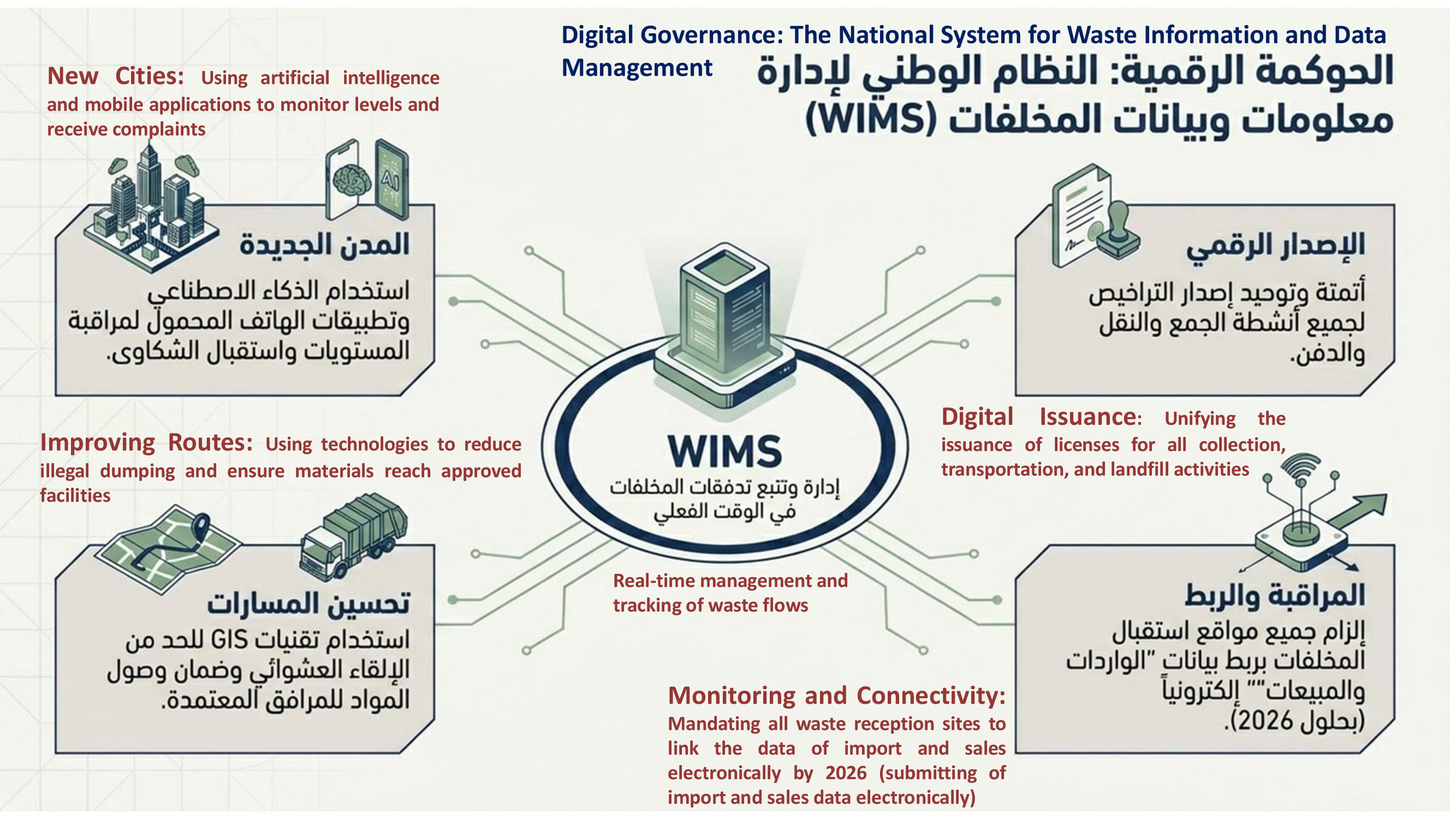
Technology-supported framework
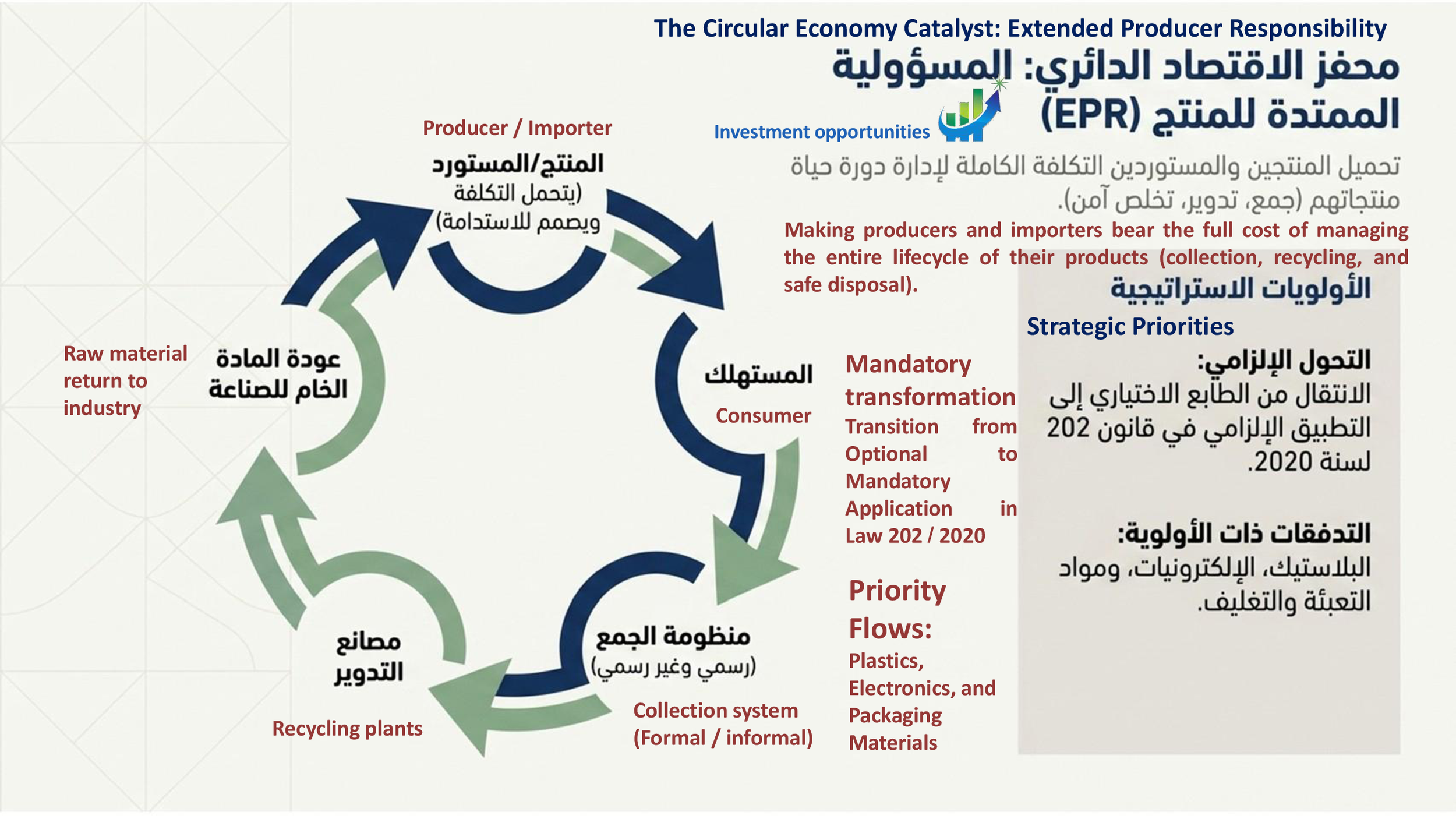
Law 202/2020 defines the path forward, outlining priorities, targets and measures. It establishes waste as high value economic resource and paves the way for a shift toward a circular economy approach.
Law 202/2020 outlines three strategic pillars
Modernizing Infrastructure
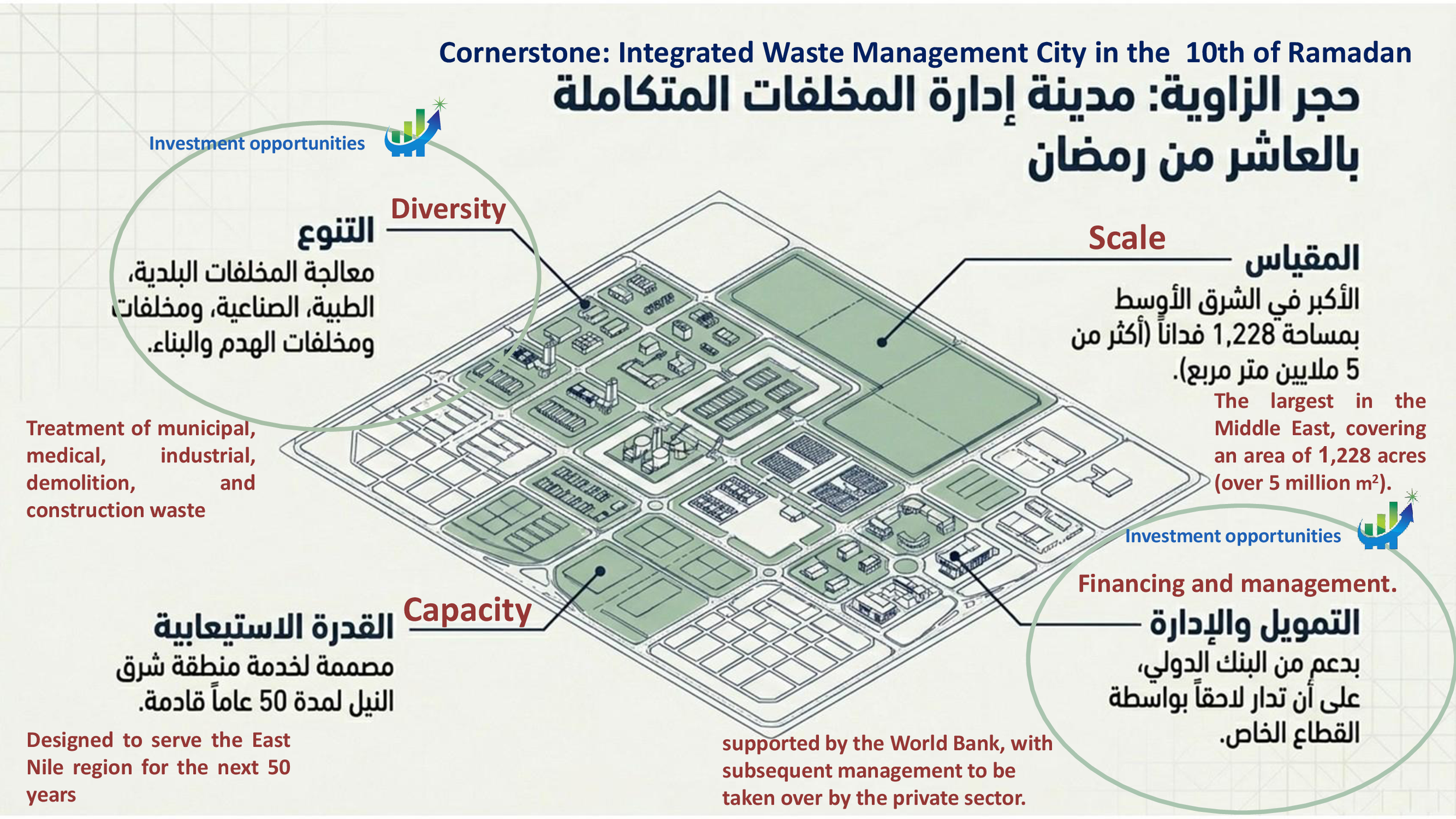
A national network of sanitary landfills, transfer stations, and mechanical biological treatment plants.
Integrating the informal sector
Regularizing the status of three million workers and transforming them from social challenge into a strategic asset and official partner.
Ensuring financial and economic sustainability
Diverse financing mechanisms, collection fees, extended product responsibility EPR, and the economics of recovered materials.
Plans include
14 mobile transfer stations (to reduce transportation costs and carbon footprint)
11 fixed transfer stations
56 landfills currently operating
infrastructure projects: 46 facilities distributed across the governorates
Private sector contracts for eight facilities in Cairo, Alexandria, Dakahlia and new cities
Governorate contributions in two facilities in Menoufia and Gharbia
National Solid Waste Management Program (NSWMP) in two cells in Gharbia and Qena
Become part of the IFAT Waste Pavilion at IWWI 2026
Secure your booth within the IFAT Waste Pavilion at IWWI 2026 today! Our team is here to guide you every step of the way and ensure your exhibition journey is smooth and successful.
You have questions? Let us know!